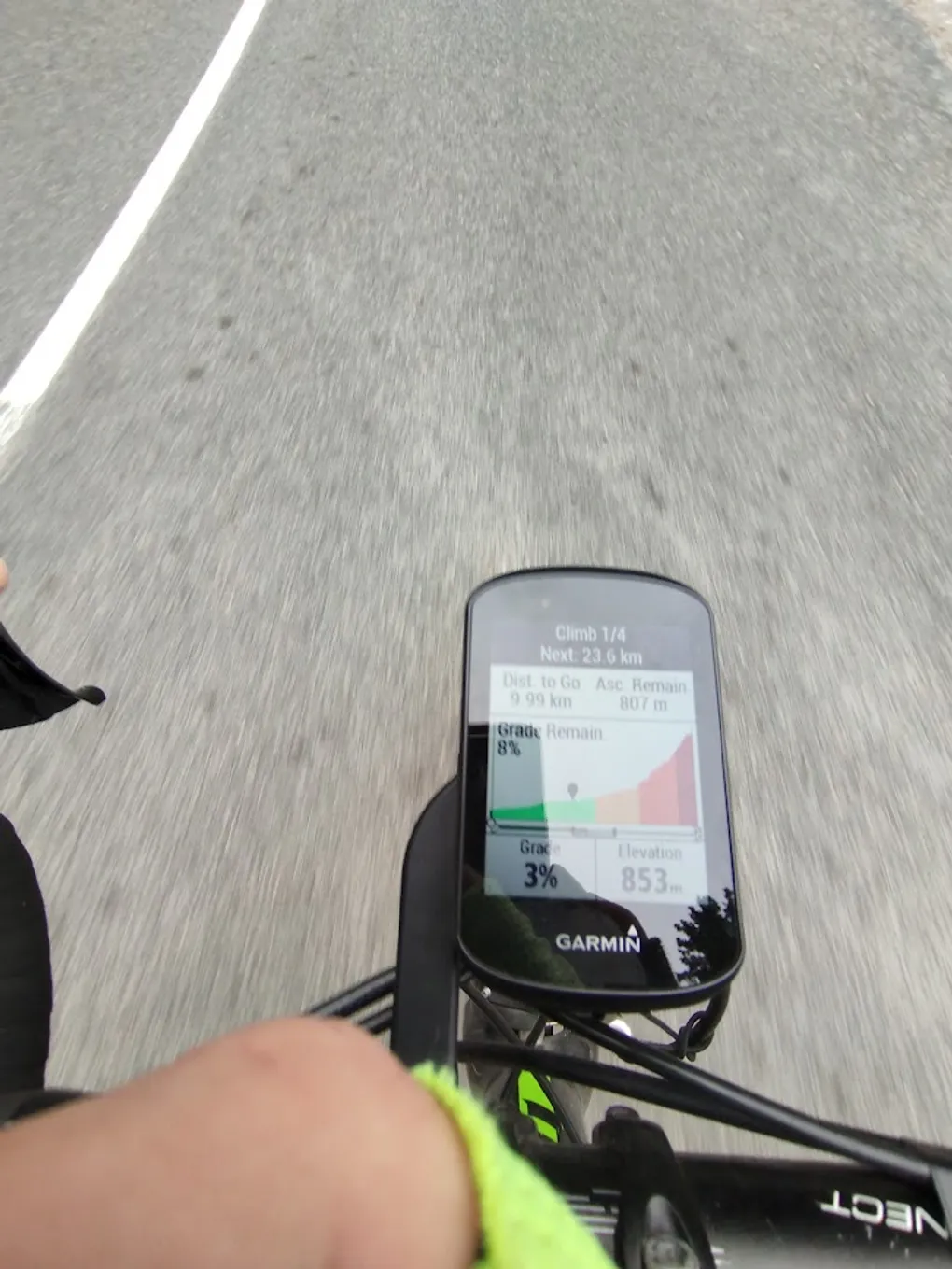
Conquering Big Climbs: The Mental Game of Cycling
There’s something uniquely challenging about staring up at a mountain pass from the bottom, knowing you have thousands of meters of vertical gain ahead. Big climbs aren’t just physical challenges—they’re mental battles that test your resolve with every pedal stroke.
Why Big Climbs?
While others might enjoy casual rides, I’m drawn to the suffering. The long, grinding ascents that make your legs scream and your lungs burn. It’s not masochism—it’s about pushing boundaries and discovering what you’re capable of when everything in your body is telling you to stop.
The Numbers Tell a Story
- 20%+ gradients: Where momentum dies and willpower takes over
- 2000m+ elevation: Where the air gets thin and breathing becomes tactical
- 3+ hour climbs: Where mental fortitude matters more than fitness
Strategy Over Strength
Big climbs are deceptive. Raw power helps, but strategy wins:
Pacing is Everything
The amateur mistake is attacking the bottom. The veteran knows to:
- Start conservative: Save 20% for the final third
- Find your rhythm: Sustainable cadence beats variable effort
- Break it into segments: Focus on the next switchback, not the summit
Gear Selection
Unlike flat riding, gear choice on climbs is critical:
- Too hard: You’ll blow up halfway
- Too easy: You lose momentum and efficiency
- Just right: A cadence of 70-80 RPM in the hardest sections
The Mental Battle
Around hour two of a big climb, something happens. Your body wants to quit. Your mind starts bargaining. This is where the real challenge begins.
Techniques That Work
The Countdown: “Just 10 more minutes” repeated indefinitely The Game: Count pedal strokes, switchbacks, trees—anything to occupy your mind The Why: Remember why you started this climb in the first place The View: Look up occasionally. The scenery is why we do this
Parallels to Software Development
Big climbs teach lessons that apply directly to coding:
Breaking Down Problems
Just as you can’t think about the entire climb at once, you can’t solve complex problems all at once. Break them into manageable chunks. One function, one module, one feature at a time.
Consistent Progress
In both climbing and coding, steady progress beats sporadic sprints. Marathon, not a sprint.
When to Push, When to Rest
Knowing when to push through and when to take a break is crucial. Burnout—on a bike or in code—helps no one.
The Reward
Reaching the summit after a brutal climb is indescribable. Your legs are destroyed, your jersey is soaked, but you did it. The descent is your reward, but more importantly, you’ve proven something to yourself.
Each big climb makes you stronger—physically, yes, but more importantly, mentally. It teaches you that limits are often self-imposed, that suffering is temporary, and that the view from the top is always worth it.
Notable Climbs
Some of my favorite challenges:
- Alpe d’Huez: 21 switchbacks, 13.8km at 8.1% average
- Col du Tourmalet: The giant of the Pyrenees
- Stelvio Pass: 48 switchbacks of pure suffering
- Local mountain passes: Sometimes the best climbs are in your backyard
The bike computer might track watts and heart rate, but it can’t measure the satisfaction of conquering a mountain on two wheels. That’s something you can only feel when you’re gasping for air at the summit, legs trembling, spirit soaring.
Next time you see a steep road disappearing into the mountains, don’t turn around. Point your bike upward and start pedaling. The climb is where you find out what you’re made of.